


Home Blog Page 330

Meet the World’s First Island Powered by an Off-Grid Renewable Energy System

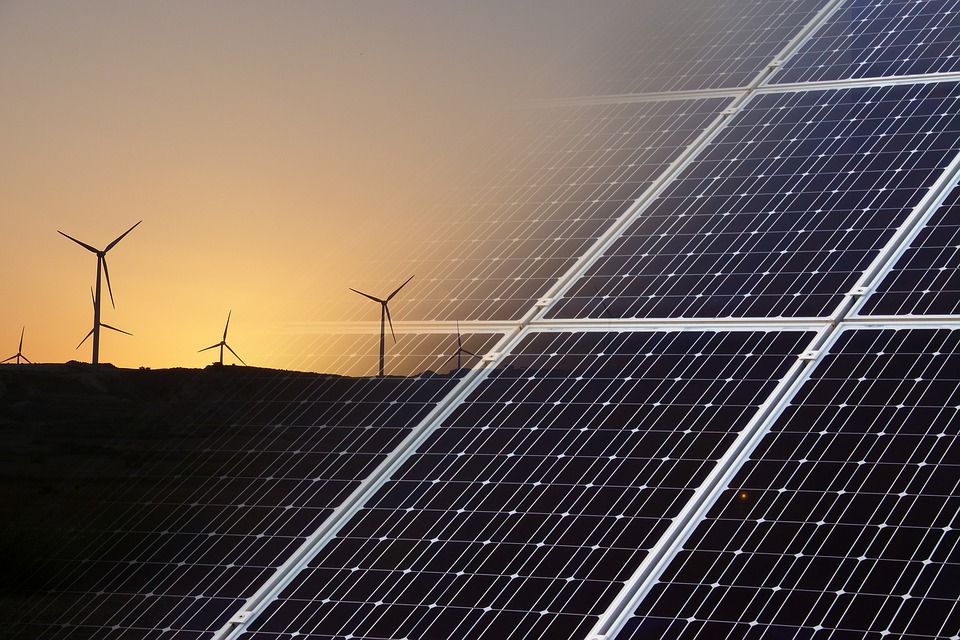
Photo-illustration: Pixabay

A tiny, scenic island lying off Scotland’s west coast is truly a model for sustainable, off-grid living. With no mainland electricity connection, the Isle of Eigg gets its electricity from the water, the wind and the sun.

After decades of using diesel generators, in February 2008 the residents of Eigg officially switched to their own renewable electricity supply, becoming the world’s first community to launch an off-grid electric system.

The 12-square-mile island, with its small population of 105 residents, gets ’round-the-clock power via a combination of hydroelectric generators, wind turbines, a photovoltaic array and a bank of batteries. On days when renewable resources are low or during maintenance, two 80kW diesel generators provide backup.

“The set-up that we’ve got now will carry the island all day and put charge into the batteries for the evening,” John Booth, the former director of the community-owned Eigg Electric company, told the BBC.

On days when there is a surplus of power—like when it’s particularly windy or rainy—electric heaters automatically switch on in Eigg’s church and community hall, which is ideal for keeping shared spaces warm throughout the winter.

This means “virtually no central heating in the system at all,” Booth pointed out. “We don’t charge for it because the whole community benefits.”

As the BBC detailed, before making the transition to renewables, the island relied on noisy and expensive diesel generators that could only run for a few hours a day. But with the new power system, energy is available 24 hours a day.

Eigg residents are encouraged to use their power responsibly. Each house has a maximum use limit at any one time of 5kW, which is enough for an electric kettle and washing machine to run at the same time, or fifty 100w light bulbs. Businesses get 10kW. Residents are fined if they use too much power but meters help keep electricity use on track.

“The whole thing is run by and for the island,” Booth said.

Researchers from all around the world—Brazil, Alaska and Malawi—have visited the isle to learn how the unique system can be adapted elsewhere.

Source: ecowatch.com

What Does Nature Mean to you? NATURE@work Photo Competition Launched

Foto: eea.europa.eu
Foto: eea.europa.eu

Nature works hard to protect us and to sustain our everyday lives — a fact that is often under-appreciated. But it plays a vital role, providing clean air, clean drinking water, clothing, food and raw materials we use to build shelter. Other benefits are not so well known, such as the role nature plays in alleviating the effects of climate change. To highlight the important role nature plays in our lives, the European Environment Agency (EEA) invites you to participate in capturing how nature benefits you through the ‘NATURE@work’ photography competition.

The EEA’s annual photo competition aims to engage with Europeans around different environmental issues and this year’s competition focuses on the benefits we receive from nature. Did you know that green spaces in and around our cities help protect our homes from flooding by absorbing excess flood water, or that trees and urban parks help lower temperatures in urban areas during heatwaves? With its intrinsic beauty and rich diversity, nature is also a source of inspiration not only for art but also for designing machines, homes and many innovation solutions.

The ‘NATURE@work’ photo competition is open to all European citizens over the age of 18 and invites them to submit photographs that illustrate any of the following three themes:
NATUREprovides: Can you capture in a photo the benefits nature makes available that you cherish most?
NATUREprotects: Have you noticed how the nature around you – in the countryside, your town or city, protects you?
NATUREinspires: Can you spot anything around you that was inspired by nature?

The winners in each category above will be awarded a cash prize. All entries may be promoted by the EEA and its partners across Europe. You can submit your photos until 15 August.

For more information visit eea.europa.eu.

Source: eea.europa.eu

Walmart Takes Aim at Supply Chain Emissions with Launch of Project Gigaton

Photo-illustration: Pixabay

Walmart has this week officially kicked off a new plan to cut greenhouse gas emissions across its global supply chain by one gigaton by 2030.

Dubbed Project Gigaton, the new initiative was unveiled at the retail giant’s annual Milestone Summit yesterday, alongside the launch of an emissions reduction toolkit that will be made available to suppliers.

The toolkit has been developed in partnership with a number of leading green NGOs, including WWF and the Environmental Defense Fund, and will provide suppliers with guidance on how to develop the business case for emissions reduction targets and then undertake the projects that will help ensure such targets are met.

The initiative will focus on cutting emissions from energy, agriculture, waste, packaging, deforestation, and product use and design, with suppliers signing up to the scheme encouraged to target one or more areas.

The company said that if it meets its gigaton goal it will cut greenhouse gas emissions equivalent to taking more than 211 million passenger vehicles off US roads for a year.

“We are proud of the improvements we’ve made in reducing our own emissions, but we aim to do more,” said Kathleen McLaughlin, senior vice president and chief sustainability officer for Walmart, in a statement. “That’s why we’re working with our suppliers and others on Project Gigaton.”

The company said the new initiative will support its recently approved science-based targets, which commit the retail giant to cutting operational emissions by 18 per cent by 2025 while also working to cut its Scope 3 supply chain emissions by a gigaton between 2015 and 2030.

Carter Roberts, president and CEO of WWF said the focus on supply chains was the “new frontier of sustainability”.

“The journey products take from source to shelf will collectively shape our planet’s future,” he said. “Project Gigaton is a testament to the transformative impact that leaders of industry can have on our greatest common challenges. As more companies follow in the footsteps of Walmart and their suppliers, we can achieve the critical mass needed to address climate change. Today’s commitment represents an important step toward a safer and more prosperous future.”

Laura Phillips, senior vice president for sustainability at Walmart, said the initiative would help businesses cut costs and improve their performance.

“Through the years, we’ve seen that integrating sustainable practices into our operations improves business performance, spurs technological innovation, inspires brand loyalty, and boosts employee engagement,” she said. “Our suppliers recognise the opportunity to realize those same benefits in their businesses. By working together on such an ambitious goal, we can accelerate progress within our respective companies and deep in our shared supply chains.”

The announcement came in the same week as rival US retail giant Target announced a set of five new sustainable packaging goals designed to curb waste levels, encourage recycling, and reduce supply chains impacts.

Specifically the firm said it would work to eliminate polystyrene from its own brand packaging and source all own brand paper-based packaging from sustainably managed forests by 2022.

It also said it would add How2Recycle labels to all own brand packaging by 2020, support the US Recycling Partnership’s campaign to bring more kerb-side recycling to communities across the country, and help create more demand for recycled packaging.

“As a leader in design, we can use our expertise to create more sustainable packaging options for our guests and help deliver products that are both better-for-you and better for the environment,” said Jennifer Silberman, chief sustainability officer at Target, in a statement. “With the power of Target’s team and our scale as one of the country’s largest retailers, we hope to be a catalyst for change across the industry – aiming for the day when all packaging will be recyclable, and leading the way to a packaging-waste-free world.”

Source: businessgreen.com

Report: UK Grid ‘Unprepared’ for Solar and Electric Vehicle Surge

Photo-ilustration: Pixabay
Photo-illustration: Pixabay

The UK’s energy system could suffer “serious consequences” unless action is taken now to prepare for the rapidly-growing number of clean technologies accessing the grid, according to a new report by think tank Green Alliance.

Launched today, the report argues that the increasing number of consumers looking to buy small-scale clean technologies, such as solar panels and electric vehicles (EVs) could risk overloading the grid at peak times, unless action is taken.

Backed by energy giant E.ON and engineernig powerhouse Siemens, the report argues unless significant changes are made to the UK’s energy system, just six electric vehicles charging in close proximity during peak periods of energy use could lead to grid overload and power cuts.

It also predicts the tipping point at which the rapid roll out of clean technologies starts to present a challenge could occur as soon as 2020, arguing the government could “lose the ability to control the speed of small-scale energy deployment” around the end of the decade.

However, the report also argues the technical issues that spring from the mass roll out of solar and EV technologies can be overcome through the development of a smarter power system.

It predicts that modern grid management technologies could harness electric car batteries capable of storing enough power to keep the UK’s lights on for seven hours at a time, effectively eliminating blackout risks by 2025. It also predicts distributed energy technologies could save customers more than £1.6bn per year.

The report recommends the government set up a new independent system designer to ensure small-scale energy is properly integrated into the energy system, and makes the case for EVs and solar installations to be given the functionality to provide grid flexibility.

In addition, more flexible ‘time of use’ energy bill tariffs should be made available to consumers to help better manage demand, bolstered by automation technologies and smart meters, the report says.

“With the right policy, EVs and solar could help keep the lights on and cut consumer bills,” said Dustin Benton, acting policy director at Green Alliance. “Political parties need to outline how the large scale energy the UK needs and the small scale energy people want can work better together.”

Brian Tilley, head of policy development at E.ON, added that with a more decentralised and flexible energy system now emerging, changes are needed to the way the system is governed.

“Put simply, in the coming years customers will increasingly take control of their own energy generation blurring the lines between consumer, generator and supplier,” he said. “The benefits of this change, if handled correctly, could be huge for both customers and the country. Ultimately, the transition to a more decentralised energy system should be grasped as an opportunity, and not be placed in the too difficult to do pile.”

Source: businessgreen.com

Study: Investment in Creating Climate-Resilient Communities Could Curb Terror Threat

Photo-illustration: Pixabay

Building resilient communities capable of adapting to the impacts of global warming is likely to be a key tool in minimising the threat from terrorist organisations around the world.

That is the conclusion of a new analysis released today from Berlin-based think tank Adelphi, which suggests terror groups such as Al Qaida, Boko Haram, and ISIS thrive in climate vulnerable communities where there is intense competition for natural resources.

The paper makes clear climate change does not cause terrorism, but argues it does contribute to the kind of socio-economic conditions that allow such groups to thrive.

For example, climate impacts such as more severe weather events can often lead to increased droughts and flooding, destroying harvests and putting pressure on local food and water supplies.

Such resource scarcity can then lead to fragility and violent conflict which allows terror groups to thrive, explained report author Lukas Rüttinger. “Already vulnerable areas could get pulled into a vicious cycle, leading to the rise of terrorist groups who will find it easier to operate, with consequences for us all,” he said in a statement.

The findings echo similar warnings from the US and UK military, which have warned the impacts of climate change have been linked to the Arab Spring, the war in Syria and the Boko Haram terrorist insurgency. However, some critics have attacked any attempt to demonstrate a link between climate and terror risks, arguing other factors play a much bigger role in driving terror groups.

The report was commissioned by the German Department for Foreign Affairs, which stressed the importance of investing in preventative action to tackle violent conflict and the rise of terror groups.

“This report confirms once again that is in all our interest to tackle climate change, and to invest in holistic solutions to conflict, starting now,” Peter Fischer, deputy director general for energy and climate policy at the German Federal Foreign Office, said in a statement. “Instability and turbulence are rising around the world and climate change is helping to drive them. We must pay attention to the early stages of the conflict-cycle, anticipate risks arising from climate change and take preventive measures.”

The Adelphi paper suggests foreign policy makers should “more effectively” link climate change adaptation, development and humanitarian aid with peace-building and conflict prevention.

Potential action areas include strengthening local institutions’ ability to deal with a climate-related crisis, supporting the growth of sustainable, climate resilient practices in vulnerable livelihoods such as fishing and farming, and improving disaster risk reduction to prevent power vacuums emerging after a natural disaster.

“A broader perspective will help to better address the root causes of the rise and growth of non state armed groups,” Rüttinger added.

Source: businessgreen.com

Mountaintop Removal Site Could Become Kentucky’s Largest Solar Farm

Photo-illustration: Pixabay

Kentucky, like most of the Appalachian region, has been in economic distress since the bust of the coal mining industry. But, new hope for jobs and the ravaged environment may come in the form of the state’s largest solar farm.

The company spearheading the initiative, Berkeley Energy Group, used to be a coal mining company and still owns thousands of acres of land in the area, including the abandoned mountaintop removal site in Pike County, Kentucky, just outside of Pikeville in the heart of coal country. Berkeley Energy is working with EDF Renewable Energy and former Democratic state Auditor Adam Edelen to build a 50-100 megawatt farm right on top of the old mine. The project was announced on Tuesday.

“This is really a history-making project for the region,” said Ryan Johns, an executive with Berkeley Energy Group.

“Bringing together major players in both coal and renewable energy to build a solar farm on a mountaintop removal site, creating opportunity for out-of-work miners, is a once-in-a-lifetime project,” Edelen told the Herald-Leader.

Coal production has drastically dropped over the last few years since the boom of natural gas and lower installation costs for renewables. According to Kentucky’s Energy and Environment Cabinet, in 2016 alone, coal production in the region, including Pike County, dropped by 40 percent from 2015, and the number of coal jobs in the county decreased by 30 percent.

“We have the opportunity to combine the strengths of both companies to bring jobs and economic development to Appalachia,” Doug Copeland, EDF development manager, said.

Though the developers aren’t sure how many jobs would be supplied by the solar farm, the project would be a massive undertaking and several hundred acres would be used to operate the facility.

Pike County is in eastern Kentucky, which doesn’t get quite as much annual sunlight as western parts of the state. But, building it in this specific location would help the developers work with the electric grid supplied by PJM, an electric company that works with homeowners to allocate renewable energy resources.

But, before they can establish anything with PJM, the developers must complete geological and energy studies to measure the potential for solar on the property. EDF said this could take until the end of the year. But, Johns said, “if it can be done, we’ll get it done.”

Source: ecowatch.com

Stanford Completes Rooftop Solar On 15 More Buildings

Photo-ilustration: Pixabay
Photo: Pixabay

Starting in 2012, Stanford University began an ambitious program to bring solar power to its Silicon Valley campus. The University’s Department of Sustainability and Energy Management reviewed 20 proposals from solar energy companies and analyzed 60 potential sites for solar installations before selecting 15 buildings most suited to rooftop solar.

After those 15 systems were completed, Stanford selected another 15 buildings to get the solar panel treatment. “Fortunately, the main grid of campus is roughly on an east-west axis, meaning that the backs of our buildings are close to directly facing south — optimum direction for maximizing photovoltaic energy production,” said Scott Gould, senior energy engineer at Stanford. “We have several flat roofs — such as Bing Concert Hall and Braun Music Center — that are also ideal for photovoltaics. We worked closely with University Architect David Lenox on the project. He and his team provided input every step of the way.”

The installation of solar panels at those 15 new buildings was completed at the end of February, allowing Stanford to add 4.5 megawatts of renewable solar energy to its local electrical grid. “The addition of on-site solar generation not only reduces the overall cost of electricity supply to our buildings, but will also help offset new campus electrical loads from plug-in buses and cars to help preserve the capacity of our campus high-voltage distribution system to support additional teaching and research activities,” said Joseph Stagner, executive director of the Department of Sustainability and Energy Management at Stanford.

The campus solar systems, plus the Stanford Solar Generating Station, which began operating in December 2016, will produce 53% of the university’s electricity. For the rooftop solar panel project, the university teamed up with SunPower, the solar energy company that designed and built the Stanford Solar Generating Station. Stanford’s sustainability efforts extend to more than solar power generation. The university’s cutting edge energy supply system known as the Stanford Energy System Innovations project also includes a revolutionary heat recovery system for the more efficient heating and cooling of campus buildings.

Additional enhancements now under study include a new high-voltage transmission line connecting SLAC National Accelerator Laboratory, Stanford, and the City of Palo Alto to further reduce electricity cost and increase system reliability and the use of ground and water heat exchange to further increase system efficiency and save water. Together, the new solar energy resources and renewables supplied by the balance of Stanford’s grid electricity purchases total 65% of university electricity use and reduce Stanford’s greenhouse gas emissions by 68 percent.

Source: cleantechnica.com

Energy UK Calls on Government to Deliver ‘Low Carbon Future’​

Foto-ilustracija: Pixabay
Photo: Pixabay

The energy industry has today stepped up calls for a major overhaul of the UK’s energy policy regime in order to ensure carbon targets are met “at least cost to consumers”.

Trade body Energy UK has published a major new report, entitled Pathways to a Low Carbon Future, which underscores the industry’s support for the UK’s Climate Change Act and sets out a series of policy recommendations for ensuring emissions targets for the early 2030s are met.

The report sets out the case for a “whole system approach” for decarbonising the energy system based on a “long-term, certain and holistic policy framework”.

It also features a raft of specific policy recommendations, urging ministers to make energy efficiency a national infrastructure priority funded through general taxation; provide a route to market for mature renewables technologies such as onshore wind and solar “to ensure decarbonisation is delivered at least cost”; and replace the Levy Control Framework with new cost controls that give developers long term visibility over the level of financial support available.

In addition it argues government should urgently develop a new approach for delivering low carbon heat technologies at scale and accelerate the development of a smart and flexible grid.

Lawrence Slade, chief executive of Energy UK, said a renewed focus on energy efficiency was critical to ensuring emissions reductions are delivered in the most cost effective way possible.

“As the report from the Committee on Climate Change found only last month energy efficiency measures have already been cancelling out the low carbon policy costs for the typical household,” he said. “The industry believes that energy efficiency should be a national priority to make the transition to a low carbon economy more affordable for both consumers and businesses.”

He also urged Ministers to step up efforts to communicate the costs and benefits of transitioning to a low carbon economy. “To tackle climate change we need to have an honest debate about benefits and costs,” he said. “All sectors including heat and transport need to work together and play their part in the same way the energy industry has done for decades.”

The report comes in the same week as a number of leading low carbon business groups submitted their responses to the government’s Industrial Strategy green paper, stepping up calls for greater clarity on how Ministers intend to deliver emissions reductions through the 2020s.

RenewableUK, the Renewable Energy Association, the Solar Trade Association, the Resource Association, the Chartered Institution of Wastes Management, and the Institute of Environmental Management and Assessment all published submissions to the government’s consultation.

They each called on Ministers to ensure the Industrial Strategy supports the upcoming Clean Growth Plan by mobilising new waves of investment in low carbon infrastructure, stepping up support for clean tech skills, and lowering barriers to investment in green projects.

Speaking to the Business, Energy, and Industrial Strategy Committee of MPs this morning, Climate Change Minister Nick Hurd refused to confirm whether the much-anticipated Clean Growth Plan would be released before June’s snap election. He said work on the plan was “well advanced” and that it was now in a “holding pattern” ahead of its release. But he also acknowledged some work still had to be done to secure cross-party sign off on the plan and the government “needs to take a view” on its publication date.

Source: businessgreen.com

Germany Increased Electric Car Charging Points 27% in 2016

Foto-ilustracija: Pixabay
Photo: Pixabay

The vitality and satisfaction of early EV adopters keeps on increasing. A vast market of electric car enthusiasts is prompting companies to offer more electric cars and more charging stations. Cleaner air, quieter roads, quieter neighborhoods, and precision autonomous features are where it’s at. With all the new varieties, growing ranges, and broadening styles of EVs, consumers see more charging spots at community places as important to their new lives.

Germany is well along the way to this exponentially bursting future. “The number of electric car charging points for public use in Germany rose by 27% last year, including hundreds more fast-charging units, amid efforts to boost the technology across Europe,” U.S. News reports.

Continuing, “The number of electric cars in Germany rose 29% to 77,153 in 2016, up from just 4,000 in 2011, BDEW said.”

U.S. News reports that Germany now has 7,407 charging points, according to the electricity industry group BDEW. “Of those added last year, 292 units were fast charging (direct current) points that can reload an electric car in minutes instead of hours.

“With public and government support growing for electric car technologies, utilities such as Innogy and E.ON are building up charging networks to tap into the market.

“BDEW’s managing director Stefan Kapferer said government funding was still important to make it viable to operate charging points, given the low numbers of electric cars. Kapferer also said the technology needed to be developed further, citing inductive charging as one way that could help to gain new customers. The long time it takes to charge batteries is one of the main disadvantages of electric cars compared to conventional cars with gasoline tanks that can be filled up in seconds.”

Source: cleantechnica.com

Albuquerque Investing $25 Million in Solar Panels for City Buildings

Foto-ilustracija: Pixabay
Photo: Pixabay

The city of Albuquerque, New Mexico, is about to start putting its money where its mouth is. The City Council unanimously passed a resolution last year calling for the city to get 25% of its energy from solar by 2025. Last week, Senator Martin Heinrich was on hand with councilors Pat Davis and Isaac Benton to announce the first step toward achieving that goal. “Why on earth would Albuquerque not be a leading solar city nationwide?” Heinrich asked. “We have all the resources in the world.”

Thanks to efforts by Heinrich, Albuquerque will be eligible for up to $25 million in federally backed bonds to pay for the purchase and installation of solar panels on dozens of city buildings. The solar panels are expected to be in operation within two years and will significantly reduce the city’s utility bill for electricity. The city will also train local workers to install the panels. Voters must now approve the plan to issue $25 million in renewable energy bonds.

The city currently gets 3% of its energy from solar, said Sanders Moore, the director of advocacy group Environment New Mexico. City councilor Davis says the first phase of the project will take the city about halfway to its goal of being 25% solar. The legislation will outline which city buildings will be the next ones to get solar energy. “People should be proud of our city today,” Davis said. Albuquerque currently ranks ninth among US cities in total solar power generated and fourth in solar power per capita according to the Shining Cities 2017 report.

Moore said the city’s high ranking is thanks to businesses and homeowners who have made the switch to solar power. The state as a whole has pushed back against those who oppose investing in clean energy, especially in areas of the state with long histories of support for the oil and gas and coal industries. She said New Mexico is the second sunniest state in the country but ranks just 13th among all states in terms of the percentage of solar power it generates. New Mexico today gets only 3% of its electricity from solar energy.

Source: cleantechnica.com

Oklahoma Ends Wind Subsidy Despite Generous Tax Breaks for Fossil Fuel Industry

Photo-ilustration: Pixabay
Photo-illustration: Pixabay

Oklahoma Gov. Mary Fallin signed a bill into law Monday that will end a state tax credit several years early for electricity generated by wind power.

Under the new legislation, wind farms that start producing energy after July 1 will not be able to claim the state’s “zero emission tax credit” program. The credit was originally set to expire in January 2021.

Fallin acknowledged that the program, which pushed claims from $3.7 million in 2010 to $113 million in 2014, helped Oklahoma become the third-largest producer of wind power in the country. However, the Republican governor noted that the state’s estimated $868 million budget shortfall necessitated the phaseout of wind incentives.

“The zero emissions tax credit was key to the growth of wind energy in Oklahoma, and I’m grateful to the industry for their ambitious successes, as well as their willingness to work with the state to address our challenging budgetary circumstances,” Fallin said. “It is time to ensure that Oklahoma has a bright future, and continues its position as a prominent energy state.”

The measure appeared to have support from the wind industry itself. Jeffrey Clark, president of The Wind Coalition, told The Oklahoman that the incentives have been “incredibly beneficial, but we remain the first and only industry to offer to phase out its incentives.”

But Fallin and state lawmakers have been criticized for keeping generous tax breaks in place for the oil and gas industry while squeezing other public services such as school funding during the budget crisis.

As the Associated Press reported:

Even then, the revenue generated by wind facilities won’t “move the needle very much on the state budget,” said Dr. Stephen Stadler, a board member of the Oklahoma Renewable Energy Council. He said lawmakers should roll back other tax credits and incentives, including generous subsidies provided to the oil and natural gas industry.

“Can we afford those subsidies?” he asked. “Things are not even. It’s not a level playing field.”

Oklahoma’s wind subsidies are dwarfed by subsidies to the oil and gas industry, David Blatt from the Oklahoma Policy Institute pointed out.

“The estimates of the cost of subsidies for wind producers vary, but we do know they are substantially less than the $400 million to $600 million cost of subsidies for oil and gas,” Blatt wrote.

Fallin’s executive budget proposed in February sought to phase out wind incentives that she said are no longer necessary.

“This industry was incentivized sufficiently to now be a major player in the Oklahoma energy industry, and a major winner of now-unnecessary incentives,” the budget read.

The Oklahoman reported last year that state fossil fuel executives, including oilman and Trump advisor Harold Hamm, had formed a coalition to lobby for the end of wind tax credits in the state.

Source: ecowatch.com

Solar Deployment Nosedives as Feed-In Tariff Cuts Begin to Bite

Foto-ilustracija: Pixabay
Photo: Pixabay

Solar deployment across the UK has suffered a sharp slowdown in the wake of cuts to Feed-in Tariff (FiT) incentives, according to new analysis of government figures from the Solar Trade Association (STA).

Deployment data from the first quarter of this year reveals installation of domestic rooftop solar panels has fallen 75 per cent compared to average deployment since the FiT began, dropping from around 2,700 installations a week to around 650 during the first three months of the year.

Meanwhile, the market for larger rooftop systems – those above 50kW in capacity generally installed on factories and other corporate buildings – has fallen 65 per cent compared to average deployment levels last year.

According to the STA, current deployment now stands at around one large factory roof installation a month.

Overall, there was an 81 per cent fall in new solar deployment during the first quarter of the year compared to the 2016 average, the STA said.

The figures come a year on from major reforms to the FiT regime – changes which saw some tariffs fall by up to 63 per cent and caps on annual spending implemented. Meanwhile, changes to business rates has meant some firms with solar installations have seen their rates rise by up to 800 per cent.

In light of the figures, the STA said it wants a “level playing field” for the technology. It is calling for “fair” business rates and also wants to see reform of the FiT policy for commercial rooftops to deliver a “smooth transition” to a subsidy-free system.

“With policy crunch points clearly hurting solar this spring we urge government to act now to stabilise the industry,” STA CEO Paul Barwell said in a statement.”Solar power led global renewables growth last year and it has an extraordinary future everywhere. But solar is being needlessly impeded in the UK by shock taxes, red tape and by a serious failure in the only remaining supportive policy. The UK solar industry risks being left behind while other major economies strengthen their stake in a booming world market.”

A spokesperson for the Department of Business, Energy and Industrial Strategy (BEIS) said the government wants Britain to be “one of the best places in the world” for clean energy investment. “Solar power is a great success, with more than 11GW of capacity installed in the past five years – that’s enough to power more than 2.6 million homes with clean electricity,” they said.

Solar developers are concerned about the slowdown in the market since last year, but also maintain that solar still represents a good investment for households and businesses in certain circumstances.

Industry insiders maintain solar projects can still offer good returns where the bulk of the power generated is used on-site, arguing such scenarios should become more common in the next few years as the cost of both solar panels and energy storage systems continue to fall.

Source: businessgreen.com

Offshore Wind Comes of Age: No Government Subsidies Needed

Photo-ilustration: Pixabay
Photo-illustration: Pixabay

Denmark offshore wind giant DONG Energy won the rights last week to build two new wind farms in the German North Sea without any government subsidies. The move represents a major milestone for the offshore wind industry, which has relied on support from European governments.

“The zero subsidy bid is a breakthrough for the cost competitiveness of offshore wind and it demonstrates the technology’s massive global growth potential as a cornerstone in the economically viable shift to green energy systems,” said Samuel Leupold, CEO of wind power at DONG.

As reported by the Financial Times:

Auctions or tenders that force companies to compete against each other have begun to replace earlier types of green subsidies, such as guaranteed fixed power prices, in many countries over the past decade, in a move that has led to much lower prices.

Nearly 70 countries now have such competitive bidding systems, up from a handful in 2005, according to the International Renewable Energy Agency.

Source: ecowatch.com

Report: Offer Londoners Cash to Cut ‘Out of Control’ Plastic Bottle Waste

Foto-ilustracija: Pixabay
Photo-illustration: Pixabay

The Mayor of London should look at offering residents free water refills and bottle return schemes in order to combat the capital’s ‘out of control’ plastic waste problem, according to the London Assembly.

A report by the London Assembly’s Environment Committee last week said more plastic bottles needed to be recycled in the capital, citing evidence showing Londoners consume more plastic bottled water per person than anyone else in England.

Moreover, London boroughs have some of the worst recycling rates in the whole of the UK, and litter monitoring has found plastic bottles make up around 10 per cent of all rubbish found in the River Thames.

Members of the Committee urged Mayor Sadiq Khan to do more to combat the problem, highlighting the success of deposit return schemes in Germany where 99 per cent of plastic bottles are reportedly recycled. Similar schemes are also soon to be trialled by Coca-Cola in Scotland.

The report calls on the Mayor to explore the feasibility of enabling London consumers to reclaim some money back in exchange for bringing their plastic bottles to designated bottle deposit machines supermarkets and other places with a view to then trialling the initiative nationwide.

It also said providing free tap water refilling stations across the city and throughout the London transport network was “essential” for reducing plastic bottle waste, as well as promoting phone apps to help consumers locate businesses willing to provide free water refills.

However, the Committee warned against any measures that might encourage consumers to drink more sugary drinks instead of water.

Labour’s Leonie Cooper, chair of the Environment Committee, urged the Mayor to ban the sale of plastic bottled water on GLA premises and to address the wider plastic waste problem in his upcoming Environment Strategy.

“Plastic waste is out of control in London,” said Cooper. “It litters our parks, pollutes the Thames, harms marine life, and adds waste to London’s landfill sites, which may be full by 2025. We have to turn the situation around.”

A spokeswoman for the Mayor’s office claimed the Environment Strategy, due in Spring 2017, would include proposals aimed at recycling food and drink packaging waste, but that national initiatives were neeeded to combat the problem.

“Sadiq is extremely supportive of initiatives to help boost access to tap water on the go, such as stores and restaurants providing free tap water, and, rather than just a London scheme, believes that government needs to consider a national deposit return scheme to encourage the re-use of plastic water bottles,” the spokeswoman said in a statement.

Parliament’s Environmental Audit Committee of MPs has also recently announced an investigation into the combatting the environmental damage caused by plastic drinks packaging, such as bottles and coffee cups.

But Bruce Bratley, founder and CEO of London recycling firm First Mile, said part of the problem was inconsistent recycling bins across the city creating consumer confusion over how to recycle properly.

“Ultimately, only when recycling is simple will absolutely everyone recycle their plastic water bottles,” said Bratley. “If a ‘money back’ scheme is introduced it will need to be easy to claim and provide an incentive for people to act on it.”

Source: businessgreen.com

How 3 Women Are Changing The World With Solar Energy

Illustration: Pixabay


Photo-illustration: Pixabay

Given the transformative potential of solar power to address growing concerns about climate change, pollution, and sustainable energy integration, as well as to effectively harness the unique skills of women, it is crucial to recognize and cultivate this relationship.

Because of its potential to spur economic independence, decision-making power, and social mobility, solar energy has a unique intersection with United Nations Sustainable Development Goal 5 which addresses the empowerment of women and girls.

This blog showcases three women from the developing world who have used small-scale solar panels, solar cook stoves, and solar lanterns to become successful businesswomen. Their stories demonstrate how women serve as frequent decision makers regarding how household energy is used and how they can serve as ideal agents of change who successfully spearhead the proliferation of solar energy.

A primary hurdle to mobilizing these agents of change, however, lies in the lack of financial independence for many women. Because domestic work is considered part of household duties and is thus perceived to be exempt from monetary compensation, women frequently have less control over how to use and distribute household income. Where an opportunity for a new solar business may exist, women often face a lack of access to sufficient starting capital.

The following case studies demonstrate how three women have surpassed various hurdles and have embraced the use of solar technology to become clean energy entrepreneurs. This growing relevance of women’s entrepreneurship through solar power also applies to every level of the energy value chain. Improving energy access, energy consumption, and solar employment opportunities for women everywhere has broad social, economic, and environmental benefits.

Mamadou Diane’s Booming Solar Business in Mali

Photo: Aarthi Sivaraman, World Bank

Mamadou Diane, the owner of a bed and breakfast south of Mali’s capital city of Bamako, is an outstanding example of a female entrepreneur who is harnessing solar power for a wide range of benefits. Diane was first introduced to solar panels in 1995 and began a bold business venture selling panels to her neighbors in the early 2000s. She was able to entice members of her community to purchase the panels by explaining how solar power could help them watch the Africa Cup of Nations football games from their own home televisions, without interruption.

Because Diane’s community is located more than 100 miles from the national electric grid, her business has helped to electrify the homes of many rural Malians who otherwise might not have been able to access electricity. By using a self-consumption solar mini-grid system to power her own bed and breakfast, Diane also was able to sustainably power her own business, inspire other female entrepreneurs within her community, and finance her brother’s education in Nigeria. She mentions how she aims to, “build [her] own house…buy more land, and expand her business.”

 Varsha Pawar’s Solar Cook Stove Business in India

In India, a nonprofit that helps women become clean energy entrepreneurs, Swayam Shikshan Prayog (SSP), has helped Varsha Pawar transform her life. Varsha, a housewife living in the Osmanabad district in the state of Maharashtra, began selling solar cook stoves and lamps in her neighborhood through the resources introduced to her by SSP. Soon after her business took off, she noted a dramatic increase in her social mobility and community influence.

Pawar mentions how previously, “she could not even move out of the house,” but that now, due to her economic influence and independence, “no household decisions are made without [her] consent.” She is also the sarpanch (village council chief) for her village and continues to advocate for the use of clean energy throughout her entire administrative block. Pawar comments on how, “many women [now] travel to seek [her] advice on how to be economically independent.”

Rebecca’s Ingenious Use of Solar Panels in Uganda

Photo: Aarthi Sivaraman, World Bank

Katherine Lucey, chief executive of the social enterprise Solar Sister, credits a large part of her inspiration to start the company to a woman named Rebecca. Rebecca, a farmer from the isolated Mpigi district of Uganda, received a solar panel through the program to initially light up her home. But instead of using the light for personal use, she placed it in the chicken house. Knowing that chickens only eat when they can see, and that with more lighting her chickens would eat more and be healthier, Rebecca felt that this decision made sense in the long run.

With this method, not only did Rebecca’s chickens get healthier, but they also laid more eggs. As she began to sell the eggs, her income increased dramatically and enabled her to buy seeds, a goat, pigs, and even a cow. As Rebecca’s farm became profitable over time, her family’s standard of living improved exponentially, enabling her to build a school where she now teaches local children how to read, write, and farm their own small plots of land.

Lessons Learned Through Women in Solar

With a host of development benefits, solar energy harnessed by women around the world has the ability to advance both human livelihoods and environmental protection. In addition to the nonprofits and social enterprises mentioned above, other international organizations, companies, development banks and more have recognized this relationship and are allocating resources toward harnessing this potential.

The World Bank, for example, has created a “gender and energy” Collaboration for Development. Through this interactive online platform, practitioners from around the world share experiences, emerging tools, available resources, and knowledge on gender equality and energy.

Additionally, the United Nations Development Programme’s GEF Small Grants Program has partnered with Barefoot College, a nonprofit that is dedicated to empowering women through solar energy, to provide technical support and funding assistance for pilot projects.

ENERGIA, the International Network on Gender and Sustainable Energy, was founded in 1996 by a group of women involved in the gender and energy sector. To date, ENERGIA networks can be found in twenty-two African and Asian countries and are currently working to scale up women-led energy enterprises.

In addition to this, the International Union for Conservation of Nature (IUCN) has established a Global Gender Office. Through the collaboration of this office and the U.S. Agency for International Development, an initiative called Gender Equality for Climate Change Opportunities (GECCO) has been established.

These projects, in addition to many other efforts, are addressing the proliferation of solar energy through a gendered lens. While the nexus between gender and solar energy is still being explored, it is exciting and promising to see the significant strides that have been made in this field and the potential there is for all that is to come.

Source: cleantechnica.com

Etsy Sets Global Zero Waste Goal

Foto: Pixabay
Photo: Pixabay

Online handmade items marketplace Etsy has announced plans to secure ‘zero waste’ status across its global operations, following news it has achieved Living Building Challenge sustainability certification for its new headquarters in New York City.

The tech company claims its new Brooklyn HQ is now the largest building in the world with rigorous LBC ‘Petal’ certification, which assesses the building’s impact on the environment, local communities, human health, and staff happiness.

As such, all materials used in the installation and fit-out of the building, including handmade tables and phones, were carefully vetted for toxic or harmful materials, with 60 per cent of the materials sourced from within 500km of the site.

In addition, all wood materials were either salvaged and reused, or sourced from responsibly managed forests under Forest Stewardship Council (FSC) certification, according to Etsy, which diverted more than 90 per cent of waste from landfill during construction of the building.

The roof is also fitted with 12kw of solar panels to help power the office, which Etsy estimates will also save around 80,000kWh of energy each year by using LED lighting and placing workspaces near windows to make the most of natural light.

In day-to-day use of the office, the company claims to have taken steps to ensure air quality is better inside than outside the building, and systems have been developed to ensure all waste, compost and recycling created on site is weighed and accounted for.

The moves form part of the company’s new goal of achieving ‘zero waste’ to landfill across its 10 global offices by 2020.

Etsy explained this meant it would divert “at least 90 per cent” of the waste it generates from landfill “as well as attempt to reduce our total consumption and waste creation overall”.

Announcing the target last week, Etsy said it would be creating internal programs to encourage employees to recycle, compost and divert as much waste from landfill as possible, while also further promoting waste reduction behaviour among its website users.

In order to track its progress towards its green goals, Etsy has also developed its own software – ‘DIVERTsy’ – to measure a building’s multiple waste streams, with plans to start trialling the system with other organisations in order to assist them in reducing their waste.

Devon Leahy, Etsy’s director of sustainability and social innovation, said reducing waste and consumption was good for the company’s business. “We believe that our efforts to minimise our environmental impact can have a favourable impact on our operating costs in the long term, so this commitment is both good for the planet and for our bottom line,” she said.

Source: businessgreen.com